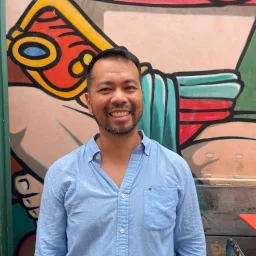
Four weeks in Silicon Valley changed how I think about building businesses, raising capital and creating opportunities for the Cardano ecosystem.
I’ve spent years building in the Cardano ecosystem. From developing CardanoPress and running Learn Cardano, to operating a stake pool, organising community events and working with projects across the ecosystem, I’ve always enjoyed taking an idea and turning it into something useful.
So when I had the opportunity to join the Cardano Genesis program at Draper University in San Mateo, California, I thought I had a reasonable understanding of what it meant to build a business.
I was wrong about quite a few things.
Over four weeks, I pitched in front of Tim Draper, learnt from experienced entrepreneurs and investors, tested business ideas, interviewed potential customers and spent time with an incredible group of founders from around the world.
I came away with a different direction for my startup, Moshi Concepts, and a much better understanding of what it takes to turn a technical idea into a sustainable business.
But what surprised me most wasn’t the pitching, the technology or even the customer interviews.
It was realising how much return venture capital investors expect.
Understanding the 100x expectation
One of the biggest lessons from the program was learning how venture capital actually works.

Before Genesis, I would have considered a company returning two, five, or ten times the original investment a fantastic outcome.
And in many situations, it absolutely is.
But venture capital operates differently.
Many early-stage investments will fail. Some companies will survive but produce modest returns. Others might deliver 2x or 10x outcomes, which sounds impressive until you look at the fund’s overall performance.
The investors need the extraordinary successes. The companies that might return 100x or more on an individual investment. Sometimes one or two exceptional companies can account for much of a fund’s success.
That changed how I understood conversations with investors.

It’s not simply about having a good product, capable developers, or a useful solution.
The question is whether your company can grow into something enormous.
Could it become a billion-dollar business? Is the market large enough? Can it scale globally? Could this investment become one of the fund’s biggest winners?
Not every venture capital firm has the same investment strategy, but the need for outsized winners explains why some investors approach opportunities the way they do.
It also explains why a perfectly good business might not suit venture capital.
That was a significant shift in thinking for me.
The challenge of building within Cardano’s market
I’ve built on Cardano for years because I believe in the technology and the community behind it.
But believing in the ecosystem and understanding the commercial opportunity are two different things.

One exercise at Draper University involved understanding the total addressable market and narrowing it down to the customers you could realistically serve.
I started looking back at projects I’d built, including CardanoPress.
WordPress is a huge market. Cryptocurrency is a smaller market. Cardano is a smaller market again. Cardano projects that use WordPress and need specific blockchain integrations are an even smaller segment.
Suddenly, you’re several niches deep.
The same challenge exists with the startup I’m building now.
If we’re developing escrow infrastructure using Cardano stablecoins, we need to acknowledge the reality of the market. Cardano’s stablecoin ecosystem is still small compared with major blockchain networks, and the amount of capital in DeFi is relatively limited.
If we only target the customers and liquidity that exist on Cardano today, is the market large enough to support a venture-scale company?
It’s a difficult question.
But does that mean we shouldn’t build on Cardano?
Absolutely not.
Part of why I want to build is because I want to help grow that market.
We need better applications, payment infrastructure, business integrations and reasons for people outside the existing crypto community to use Cardano.
The challenge is building something that addresses a large real-world problem, rather than limiting the business to the current size of the Cardano ecosystem.
It’s a different way of looking at the opportunity.
Customer validation is harder than it sounds
Another lesson that became clear very quickly was how difficult it is to find and talk to potential customers.
We had sessions covering business hypothesis testing, customer interviews and market validation with mentors including David Bland and Jim Morris.

As developers, we’re used to building things.
We see a problem, think of a technical solution and start writing code.
Customer validation requires a different set of skills.
You need to find the right people, convince them to spend time talking to you, ask meaningful questions and understand whether the problem you’re trying to solve is genuinely important to them.
That takes an enormous amount of effort.
Without an established network, even finding people to interview can be challenging.
And asking someone whether they like your idea isn’t enough.
People will often tell you something sounds interesting. They might even say they would use it.
But that doesn’t mean they’ll actually become a customer.
You need to understand what they’re already doing, what they’re paying for, where the pain points are and whether they’re willing to change their behaviour.
This experience changed how I approach product development.
Instead of spending months building a finished product and hoping customers arrive, I’m working towards smaller releases, customer conversations and testing assumptions along the way.
How Genesis changed Moshi Concepts
I entered the program with an idea around Web3 bounties.
The concept was straightforward. Someone could create a bounty, lock funds into a smart contract and release payment when the work was completed.
During Genesis, I started testing that workflow, including experimenting with USDM stablecoins on testnet.
But as I worked through the idea, I started questioning whether the bounty platform was actually the most interesting part.
What if the underlying escrow technology could be used for much more?
Escrow is relevant to freelancers, marketplaces, auctions, business transactions, grants, milestone payments and many other industries.
Instead of building one application, could we build reusable escrow infrastructure and then demonstrate its value through real products?
That became the evolving direction for Moshi Concepts and our work on Hokan, a programmable escrow platform.
The longer-term vision includes APIs, SDKs, payment integrations, dispute resolution and support for transactions involving people and autonomous AI agents.
But the approach is different now.
Rather than trying to build everything at once, the goal is to identify a clear customer problem, develop an MVP and expand based on actual demand.

One of the most valuable questions came from Tim Draper during our pitch day.
Was building the infrastructure itself enough?
The answer was no.
You still need applications, customers, distribution and a business model. Building the technology doesn’t automatically create a market.
Andy Tang also challenged me on another fundamental question.
Why would anyone trust a smart contract with their money?
That question continues to shape the work we’re doing. Security, trust, audits and dispute handling can’t simply be features added later. They need to be part of the foundation.
Pitching to investors is like speed dating, only harder
Pitching in front of Tim Draper was one of the highlights of the program.

Getting there took a surprising amount of preparation.
I spent hours rewriting slides and practising my presentation, sometimes walking 17,000 to 20,000 steps around San Mateo while repeating the pitch over and over again.
I even managed to get a laugh out of Tim Draper with a joke about buying and selling an island.
But delivering a prepared pitch is only one part of the experience.
Talking to investors afterwards is an entirely different challenge.
I started comparing the investor networking sessions to speed dating, except in some ways it’s worse.
You have a short amount of time to explain your business, establish a connection and determine whether there is any mutual interest.
Some investors don’t invest in blockchain companies.
Some have a completely different investment thesis.
Others might not understand the technology or the market you’re describing.
And some are simply not the right match, regardless of how well you deliver your pitch.
You quickly learn that not every conversation will lead somewhere.
Finding the right investors is as important as convincing them that your business has potential.

It’s a process of building relationships, understanding what investors are looking for and accepting that rejection is going to be a normal part of the journey.
Four weeks surrounded by founders
One of the biggest benefits of Draper University was the environment.
For four weeks, almost everything revolved around building startups.
We attended sessions, challenged each other’s ideas, practised pitches, met mentors, talked about fundraising and worked through business problems.
There were lessons about go-to-market strategies, fundraising momentum, tokenisation, regulatory challenges and the importance of resilience.

Some of the most memorable conversations came from people like George Northup, whose experiences building businesses through enormous uncertainty reinforced the importance of persistence.
But just as valuable were the conversations with the other founders.
Everyone came into Genesis at a different stage.
Some already had products and customers. Others were refining their ideas, preparing launches or working through major decisions about their businesses.
We shared ideas, challenged assumptions and learnt from each other’s experiences.
The experience wasn’t only about formal programming. It was also the shared meals, late-night conversations, community gatherings and friendships.

I’m still in contact with the core Genesis group today.
We’re now scattered across different countries, dealing with our own responsibilities and working at different speeds.
We may no longer have the same uninterrupted focus we had in San Mateo, but everyone is still pushing forward, building and trying to make things happen.
That network of people is something I value enormously.
Returning to Australia and the reality of startup life
Coming home brought another reality check.
At Draper University, I could dedicate nearly all my time to working on the startup.
The entire environment encouraged it.
Back in Australia, life returned.
There are family responsibilities, client work and the day job that pays the bills and keeps the lights on.
And somewhere alongside all of that, there’s Moshi Concepts.
Finding the balance isn’t easy.
There are still plenty of ideas buzzing around in my head, and AI development tools are making it easier than ever to experiment, prototype and build new things.
But having the tools doesn’t mean having unlimited time.
What has changed is the structure.
I’m much more deliberate about what needs to happen, which assumptions need testing and how to move the business forward.
I’m also looking more closely at non-dilutive funding opportunities, including grants and other funding models that allow us to develop the technology without immediately giving away equity.

I haven’t abandoned the ambition to build something significant.
I’m simply more conscious of the practical steps required to get there.
There is a big difference between having four weeks dedicated entirely to your startup and building that same startup while managing the rest of your life.
And I suspect that is the reality for many founders in the Cardano ecosystem.
What Genesis means for Cardano
When people hear about accelerators and startup programs, it’s easy to focus on how much funding the participants receive.
But I think that misses the bigger opportunity.
Genesis wasn’t simply about handing some Cardano projects money and wishing them good luck.
It was about finding founders with potential and giving them the knowledge, relationships and experiences to make better decisions.
The program brought together founders at different stages of their journeys and challenged us to think beyond the technology.

How do we find customers? How do we establish trust? How do we grow beyond our existing communities? How do we attract investment? How do we create businesses that can sustain themselves?
These questions matter enormously for Cardano.
We already have talented developers, researchers and people building interesting technology.
But technology alone isn’t enough.
We need businesses that can take that technology to real customers, solve problems beyond the blockchain industry and bring new economic activity into the ecosystem.
For venture-backed startups, that also means creating opportunities large enough to potentially deliver the outsized returns those investors seek.
Not every startup will become a unicorn, and not every successful business needs venture capital.
But if Cardano wants to attract more private investment and support globally competitive startups, helping founders understand those expectations is valuable.
The benefits of Genesis won’t necessarily show up immediately.
Some founders will pivot. Some businesses will struggle. Some may fail.
Others could go on to build meaningful companies, create employment, introduce new customers to Cardano and attract investment that would otherwise never have entered the ecosystem.
The real value is in improving the chances that those founders make the right decisions as they build.
The program ended. The work didn’t.
Draper University didn’t give me all the answers.
If anything, I came home with more questions than I started with.
But they’re better questions.
I understand the importance of customer validation, market sizing, investor alignment and building a business rather than simply building software.
I have a clearer direction for Moshi Concepts, an incredible network of founders and a more structured approach to turning the vision into something real.


And I have a much better appreciation for the scale of the challenge ahead.
The four weeks at Genesis were only a small part of the journey.
The real test is what we do with everything we’ve learnt now that we’re back home, working on our businesses and dealing with everyday life.
For me, that means continuing to build Moshi Concepts, validating our assumptions and working towards useful escrow infrastructure that can support commerce and payments on Cardano.
For the Cardano community, I hope Genesis demonstrates why investing in founders and their capabilities matters just as much as supporting the technology they build.
Because the next major success story for Cardano might not come from funding another technical feature.
It might come from giving the right founder the knowledge, connections and confidence to build something that reaches the rest of the world.
And that’s what makes programs like Genesis worth supporting.
Peter Bui is the founder of Moshi Concepts, creator of Learn Cardano and CardanoPress, and an operator of the ADAOZ stake pool. He participated in Draper University’s Cardano Genesis program in 2026.


